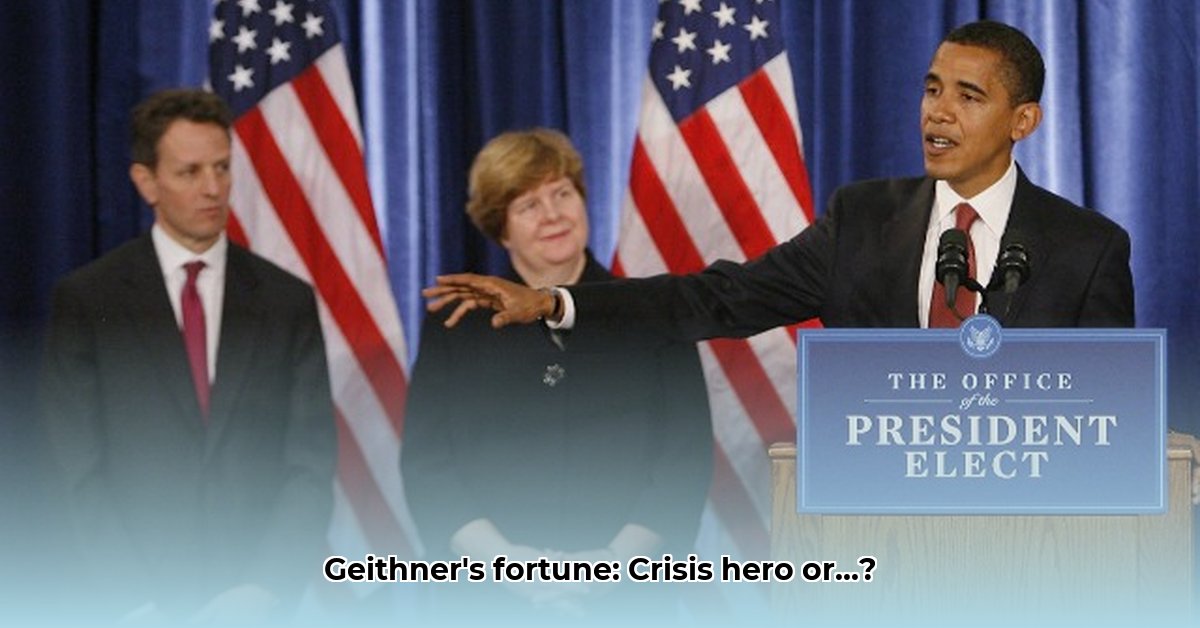
Tim Geithner's tenure as U.S. Treasury Secretary during the 2008 financial crisis cemented his place in history. His role in navigating the economic turmoil, however, remains a subject of intense debate, influencing perceptions of his legacy and inevitably, fueling curiosity about his net worth. This article explores Geithner's financial journey, analyzing his career trajectory and the long-term impact of his decisions, both on the economy and his personal wealth.
The 2008 Crisis: A Defining Moment
The 2008 financial crisis was a watershed event, characterized by widespread bank failures, housing market collapses, and widespread economic uncertainty. Geithner, thrust into the role of Treasury Secretary, had to make crucial decisions under immense pressure, overseeing the government's response to the crisis. His leadership was vital in attempting to prevent a complete economic collapse.
The Bailouts: Necessary Evil or Costly Mistake?
The Troubled Asset Relief Program (TARP), a massive government bailout initiative, was central to Geithner's crisis management strategy. While credited with preventing a total economic meltdown by many, TARP sparked fierce criticism for its perceived favoritism towards large financial institutions. “The debate over TARP's effectiveness and fairness continues to this day,” notes Dr. Anya Schiffrin, Professor of Journalism at Columbia University. This controversy significantly impacts the lasting perception of Geithner's actions.
Dodd-Frank: Reforming a Broken System?
The Dodd-Frank Wall Street Reform and Consumer Protection Act, a landmark piece of legislation, aimed to prevent future financial crises. Geithner played a key role in its passage. However, its effectiveness remains a topic of ongoing debate, with some arguing that it didn't go far enough, and others suggesting it added excessive regulation. The long-term consequences of Dodd-Frank are still being assessed, adding another layer of complexity to Geithner's legacy.
Tim Geithner's Net Worth: A Modest Fortune?
While precise figures regarding Geithner's net worth are unavailable publicly, reports suggest a relatively modest fortune compared to some of his predecessors. This raises interesting questions. Does this modesty reflect a prioritization of public service over personal enrichment? Or is it simply a reflection of his career path following his government service? The answer is multifaceted and requires further contextualization.
Comparing Geithner to His Predecessors
Comparing Geithner's post-Treasury career and financial situation to those of his predecessors, such as Hank Paulson, provides valuable context. This comparative analysis helps illuminate the complexities of high-level government service and potential conflicts of interest. Analyzing these differences offers insights into how post-government career paths and financial gains might be influenced by government service.
The Broader Context: Government's Role in Economic Stability
Geithner's net worth is inextricably linked to the larger discussion about the appropriate level of government intervention in the economy. The debate about the benefits and drawbacks of large-scale government bailouts and the extent of government's role in economic stability remain central to policy discussions. These debates continue to shape policymaking and influence how economists approach future financial instability.
The Enduring Legacy
The 2008 financial crisis and its aftermath continue to resonate today. Understanding the decisions made during that period, including those made by Timothy Geithner, remains crucial. Analyzing his net worth within the broader context of his career and the long-term effects of the crisis illuminate the enduring debate about the balance between public service and personal wealth, and the ethical considerations involved.
Three Pivotal Points:
- Geithner's role in navigating the 2008 crisis significantly shaped his career and subsequent opportunities.
- The controversy surrounding TARP and Dodd-Frank continues to influence opinions on his legacy.
- The relatively modest (compared to some peers) reported net worth raises questions about the relationship between public service and personal financial gain.